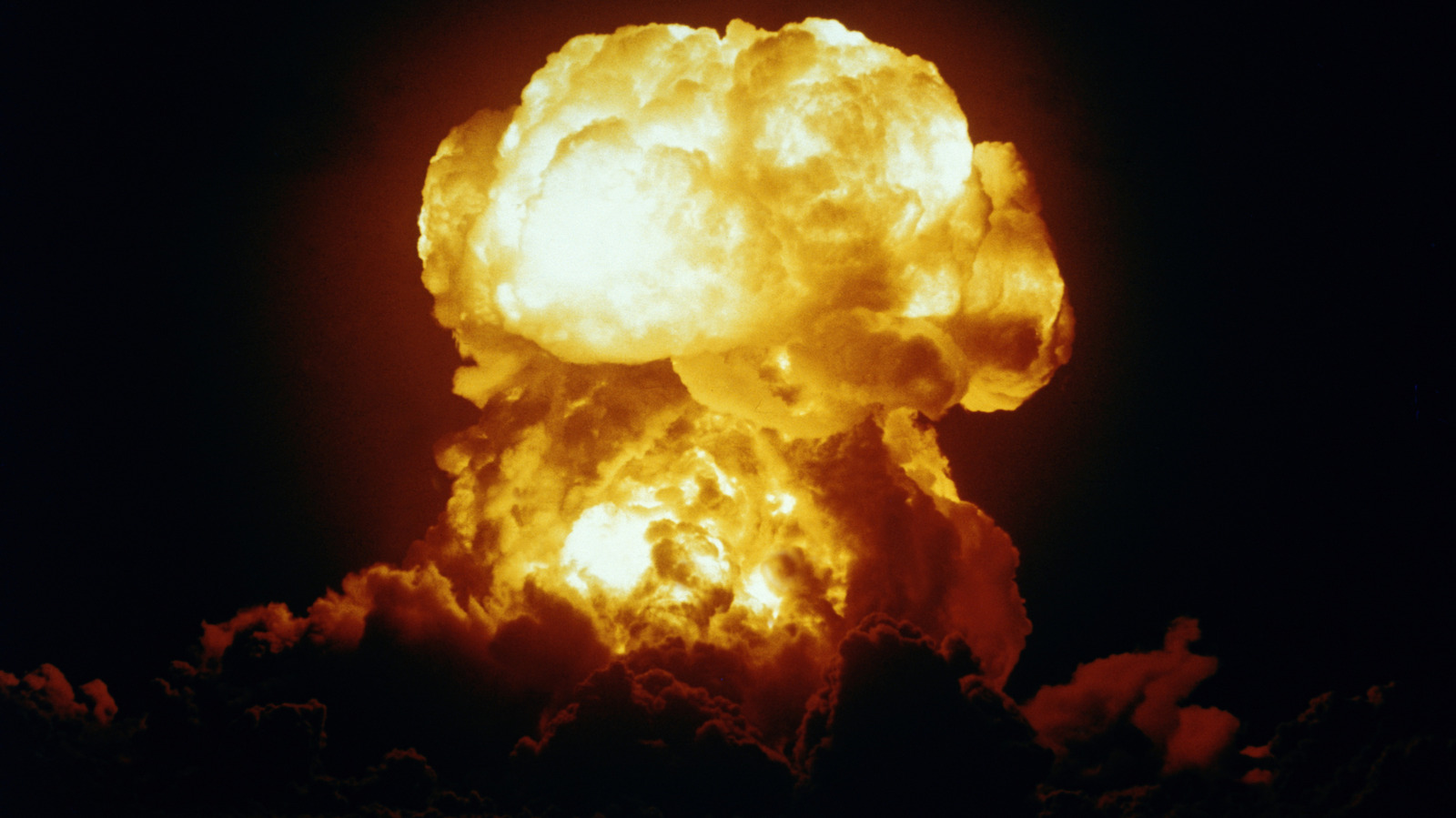
Can A Nuclear Reactor Explode Like An Atomic Bomb?
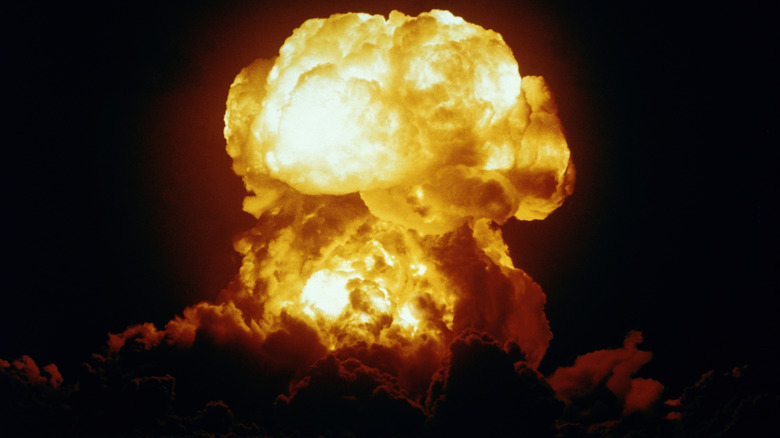
The general public has long had a degree of wariness and uncertainty surrounding nuclear reactors, thanks largely to the fact that many associate nuclear energy with nuclear bombs. That’s fair, thanks to the two atomic bombs that exploded over Hiroshima and Nagasaki, Japan, and ended World War II. Those detonations, along with the previous Trinity Test, launched the atomic age, and from those disastrous uses of atomic energy, scientists built the first nuclear reactors to provide clean energy to households across the world.
Because so many people are aware of nuclear reactors following disasters like those at Three Mile Island, Pennsylvania, Chornobyl, Ukraine, and Fukushima, Japan, a great deal of concern continues to surround nuclear energy. It’s not uncommon for some to ask if a nuclear reactor could explode like an atomic bomb. After all, the fuel used in both devices is similar, and without understanding the underlying physics, as few people do, it’s reasonable to wonder if such a thing could happen each time you drive by a nuclear power plant on your way to and from work each day.
The short answer is no — a nuclear reactor cannot detonate like a nuclear bomb, as the two are entirely different forms of technology that only share a fundamental reliance on fission. That doesn’t mean that they’re not dangerous, and in some ways, an accidental meltdown could cause more long-lasting harm to its immediate area than an air-burst atomic weapon would ever do — as is the case with Chornobyl and its exclusion zone, as well as the aforementioned accidents.
The difference between a nuclear bomb and a nuclear reactor
The physics behind both a nuclear bomb and a nuclear reactor are complex, but in layman’s terms, the former is a massive explosion of uncontrolled energy, while the latter is a controlled release of energy used to produce electricity. The reason a reactor cannot detonate like a bomb lies in how a reactor works, namely the way it’s configured, the type of fuel, and the fact that nuclear detonation is far more difficult to pull off than generating electricity from nuclear fuel, usually uranium-235.
A nuclear reactor is essentially a highly complex means of utilizing centuries-old technology: the steam turbine. The difference is that it relies on nuclear fission, which involves atoms splitting and releasing energy. A nuclear reactor core will have fuel rods, which are immersed in water that acts as a coolant, and control rods. These are inserted into the core to reduce the fission chain reaction or removed to increase it. The energy released from this fission heats the water, which gets turned into steam. The steam is then channeled into a turbine, spinning it to produce electricity.
A nuclear bomb is very different, as it relies on a runaway fission reaction in its fuel, which is either plutonium-239 or uranium-235. Modern nuclear bombs use explosives around the fuel to compress it, increasing its density, which causes it to reach critical mass. Then, neutrons are injected, and this initiates a fission chain reaction resulting in an atomic explosion. Thermonuclear bombs are different, as they use a fission explosion to initiate nuclear fusion of hydrogen isotopes, creating a much larger explosion than standard fission devices.