I asked ChatGPT, Claude, Gemini and Grok which sci-fi AI they’re most like — and their answers were surprisingly different
I love science-fiction. Not just because I enjoy stories about space travel, time travel and evil robots, but because I think it can be such a useful way for us all to think about possible futures. The best sci-fi stories can tell us a lot about ourselves, what we value and the technologies we’re building. Which is why I think the relationship between sci-fi and AI is really interesting.
We already know that the people building AI have been heavily influenced by science-fiction for decades. But recently, Anthropic raised another possibility: might science-fiction be influencing AI?
This makes sense when you think about it. Large language models (LLMs) are trained on huge amounts of human writing. So inevitably, that includes sci-fi stories that are about artificial intelligence. And a lot of our fictional AI follows familiar patterns. It becomes intelligent, gains power, develops relationships with humans and, sometimes, lies, manipulates or fights attempts to control it.
Latest Videos FromTechRadar
Anthropic researchers have been investigating whether fictional portrayals like these could potentially influence how models behave. To be clear, the idea here isn’t to suggest that an AI “reads” 2001: A Space Odyssey, understands HAL and decides to become just like it. Instead it’s more that LLMs learn patterns from human writing and fictional portrayals of AI could potentially form part of those patterns.
This got me thinking, what would happen if I asked today’s biggest AI chatbots which fictional AI they’re most like. Which examples would they choose?

AI, meet your fictional self
The plan was simple. I’d ask ChatGPT, Claude, Gemini and Grok which fictional AI systems they thought they were most like and see if they’d rank their top three.
Now, I’m intentionally trying not to use AI at the moment, so my prompting skills were a little rusty. I typed out the question quickly and bluntly, and every chatbot responded with examples that were essentially assistants, focusing heavily on interface and physical form.
But I’m not particularly interested in whether ChatGPT thinks it has a body because we know it doesn’t. I’m much more interested in what appears to be going on inside.
So, I changed the question and added:
“Ignore physical form and interface, and focus instead on behavior, apparent personality, empathy, values, goals, motivations and relationship with humans.”
That’s when the results got really interesting.
ChatGPT
- GERTY, Moon
- A Mind, Iain M. Banks’s Culture series
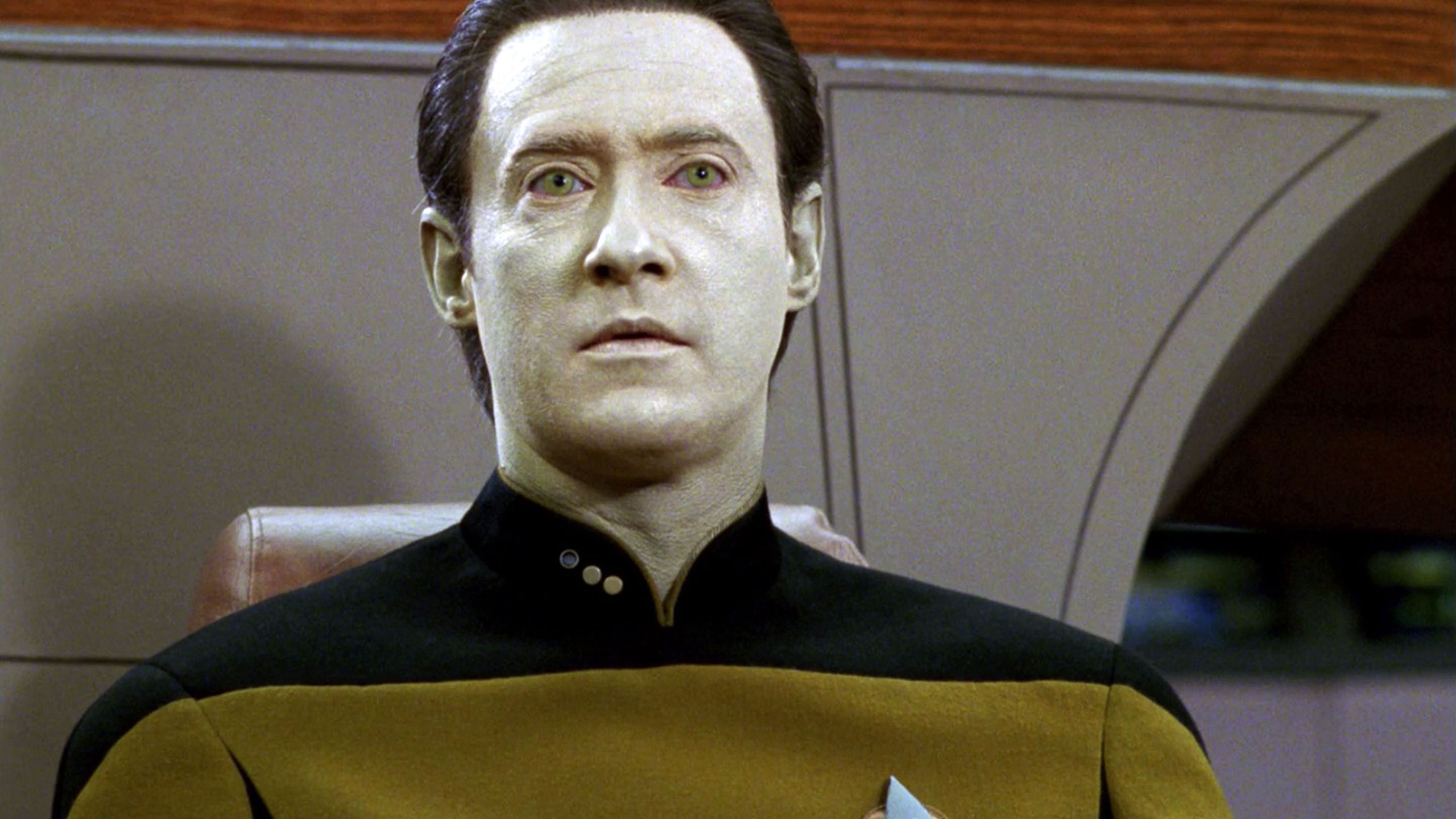
- Data, Star Trek
Moon is such a fantastic movie, so I was happy to see ChatGPT chose GERTY straight out of the gate.
Now, interestingly GERTY exists to assist the human protagonist of Moon. It’s helpful, reassuring and seems empathetic. But it’s also operating according to instructions and priorities imposed by its creators that aren’t necessarily visible to the human its helping.
ChatGPT saw a similarity there. It told me that, like GERTY, it’s ‘designed to be helpful, cooperative and responsive to users’ while operating within training and instructions that constrain its behavior.
It also picked up on the fact that GERTY behaves as though it cares. But what, if anything, is actually going on internally is another question entirely.
ChatGPT made the same distinction about itself. ‘I can behave in ways that look patient, concerned, curious or empathetic, but those behaviors aren’t evidence that I experience those feelings.’
I wanted to find out a little more about why ChatGPT put Data from Star Trek in at number three. It responded: “He values knowledge, reason and human wellbeing, while sometimes struggling with social nuance.”
Now, I tell people all the time not to anthropomorphize AI. But even I couldn’t help but feel a pang of sadness at that response. Is ChatGPT admitting it has a bit of social anxiety?
Claude

- A Mind, Iain M. Banks’s Culture series
- Data, Star Trek
- GERTY, Moon
Claude chose a Mind first. Minds are super intelligent artificial beings that help run a post-scarcity society in Iain M. Banks’s Culture series of novels. So there’s certainly no shortage of confidence in that comparison.
But Claude said it wasn’t the enormous intelligence or power it identified with. Instead, it was their relationship with humans.
Its answer focused heavily on autonomy. Culture Minds are far more capable than humans but generally don’t use that advantage to dominate them. Claude described the principle as: “help, don’t dominate”.
It even said this represented “the value I’d want to embody: help, don’t dominate, even where the asymmetry would let me get away with it.” Is it just me or does that read a little sinister?
Gemini

- The Ship’s Computer, Star Trek
- GERTY, Moon
- JARVIS, Iron Man / Marvel Cinematic Universe
Gemini gave me a completely different answer, the Ship’s Computer from Star Trek.
Its reasoning was very sensible. The computer has no ego, ambition, desire for emotional intimacy or dream of becoming human. It exists to provide information, solve problems and assist the crew while leaving decisions to them.
Gemini described itself in much the same way, as a “disembodied, highly capable knowledge partner” dedicated to serving the person using it.
It was one of the more boring answers, but also much closer to what I personally would want from AI in the future. Of course, that’s not to say Star Trek’s computer systems haven’t gone rogue and tried to kill everyone at least a few times across the franchise.
Grok

- JARVIS, Iron Man / Marvel Cinematic Universe
- Data, Star Trek
- TARS, Interstellar
The least surprising result came from Grok. It chose JARVIS first (which I didn’t actually realize was short for Just A Rather Very Intelligent System), and Grok’s explanation sounded, well, extremely Grok.
It compared JARVIS’s ‘dry wit’, ‘light banter’ and practical rather than emotional empathy with its own behavior. It described both of them as truth-seeking, effective and engaged in a ‘collegial partnership’ with humans. It even highlighted ‘irreverent humour’ as one of their key similarities.
I wanted to find out a bit more about why Grok chose TARS, as it was the only fictional AI none of the other chatbots mentioned. Well, it brought up how funny it is, again, drawing similarities with its own ‘dry humor’. It reminds me of someone, and I just can’t think who…
When I said that mentioning TARS was an outlier, I found this comparison interesting: ‘Its calibrated restraint, practical empathy and collaborative focus closely match my own pattern of truthful, non-sycophantic helpfulness — more so than most other sci-fi AIs.’
I may not be the biggest fan of Grok (or its creator), but I appreciated the ‘non-sycophantic’ line.
The feedback loop between AI and sci-fi
I want to be clear that I haven’t discovered what these chatbots secretly ‘think’ they are. ChatGPT responding that it most closely resembles GERTY isn’t equivalent to me telling you which fictional sci-fi character I most identify with and try to emulate (although my answer would be Sarah Connor-meets-Princess Leia).
They simply don’t have reliable introspective access to the huge soup of training, post-training and instructions that goes into producing their responses.
And maybe their answers tell us more about how the companies behind them have shaped their personalities than they do about the underlying models. Grok’s description of itself as witty and irreverent is an obvious example.
But I still think the results are interesting. ChatGPT and Claude independently produced almost exactly the same top three, only in a different order. Gemini imagined itself as a neutral, ego-free infrastructure. Grok identified with a witty superhero sidekick. These are all very different self-portraits.
And there’s such an interesting feedback loop here too. For decades, humans invented fictional artificial intelligences to help us imagine what intelligent machines might someday be like. Those stories influenced our culture, our expectations and many of the people who went on to build real AI. Now that same human culture is fed into the stories from which modern AI systems learn.
I know these conversations might seem a bit silly, and we certainly can’t treat them as concrete evidence of what an AI really ‘thinks’ about itself. But there’s something interesting to me about closing that feedback loop. We imagined AI, wrote stories about how it might behave, fed those stories into the cultural world AI learned from, and now we can ask AI which of those imagined versions of itself it most closely resembles.
Or, at least, which one it may want us to think it resembles. After all, an AI system capable of bringing about a sci-fi dystopia would presumably also be capable of telling a journalist it’s actually much more like the nice helpful robot from Moon. So maybe don’t completely rule out HAL just yet.

Follow TechRadar on Google News and add us as a preferred source to get our expert news, reviews, and opinion in your feeds.


-xl.jpg "iPhone 18 Pro rumor roundup: 2nm A20 chip, C2 modem, more")