Elon Musk: ‘At some point, Starlink will deliver a majority of the world’s internet,’ but that promise hinges on launching thousands more next-gen satellites and the massive Starship working as promised
- Starlink Mobile could become a reality in 2027
- It will likely rely on the very new Starlink V3 satellite
- SpaceX’s huge Starship will play a crucial role in the effort to compete with major carriers
SpaceX’s first earnings call this week as a publicly traded company was full of promises and hyperbole, including the prediction from boaster-in-chief Elon Musk (also SpaceX CEO and Chief Engineer) that Starlink “will deliver a majority of the world’s internet, at least in countries where we’re allowed to operate, which is the vast majority of countries.” As for a time scale, think not the distant future, but fewer than 10 years.
That’s some bold talk, but SpaceX President, COO, and someone far less likely to wax bombastic, Gwen shotwell, backed up those claims. “As far as revenue, I’m just going to take a very high-level kind of top-down. The big three in the U.S., AT&T, Verizon, and T-Mobile, roughly between them, $600 billion a year. I anticipate us to be able to acquire quite a few of their customers because I think our service will be better.” Shotwell told investors.
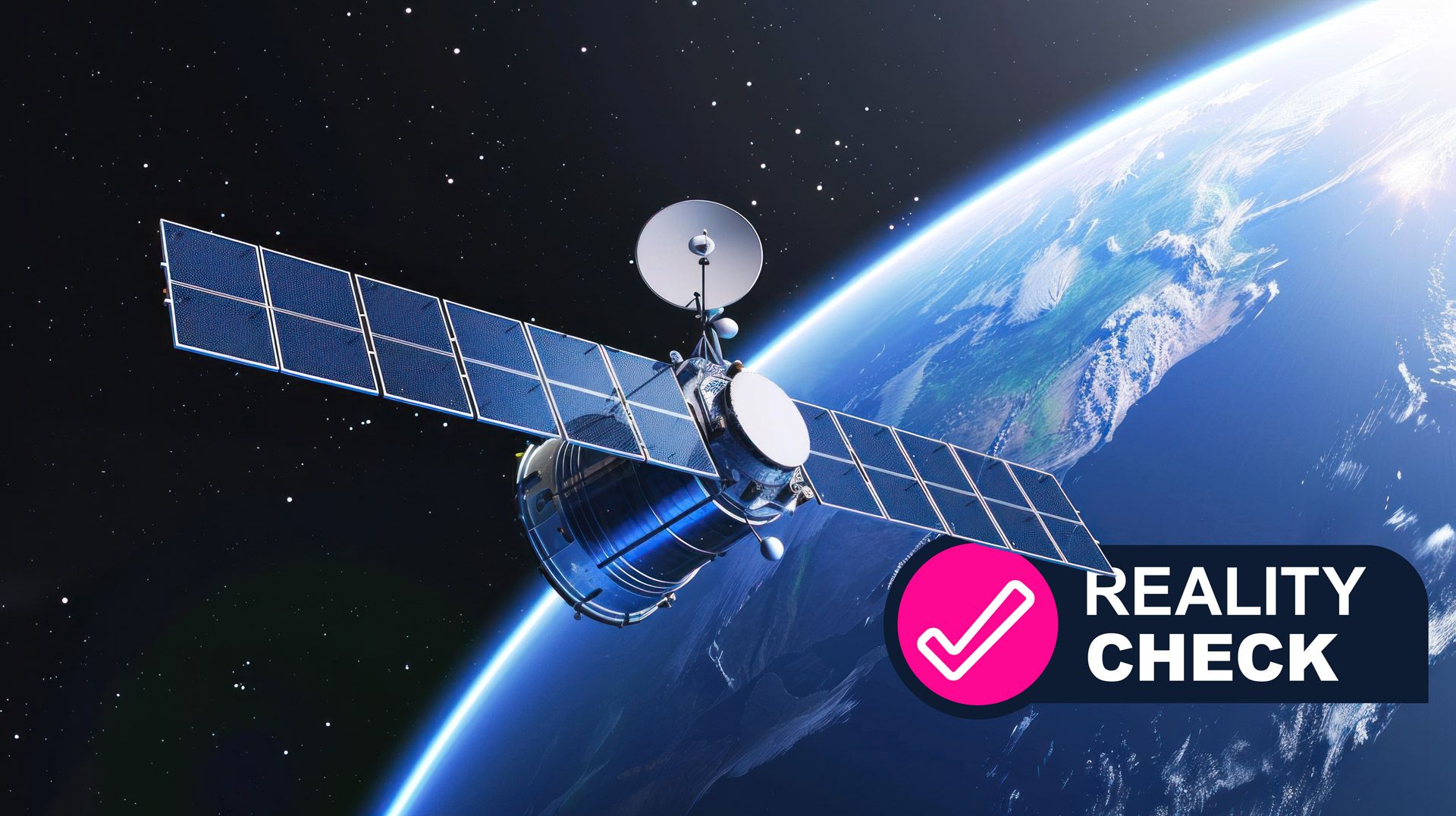
These promises all hinge, in part, on the development and launch of Starlink’s V3 satellites, which will, on a per-satellite basis, drastically improve throughput. Starlink’s current V2 satellite has a downlink throughput of roughly 80GBps. V3 can, the company claims, deliver 1 Terabit of downlink connectivity. Uplink jumps from roughly 7 Gbps to between 160 and 200 Gbps.
Latest Videos FromTechRadar
It’s not just the speed; Starlink V3 satellites promise exponentially more beams, which is basically support for more concurrent users. V2 offers just under 200 beams while V3 promises 2048 per satellite.
Still, with just a reported 10,918 Starlink satellites in low Earth orbit (LEO), they will need a way of quickly delivering tens of thousands of satellites into orbit to achieve this lofty goal.
And so the other part of this hyperbolic plan hinges on SpaceX’s still-in-testing Starship rocket. Granted, the 408ft tall spacecraft is rapidly transitioning to the operational phase and may have a full launch as soon as this month. It’s already lifted some V3 satellites into orbit during one of its earlier orbital test flights. Now, to realize Musk’s plan, it must shift to rapid launch deployment and then relaunch and deploy again.
Musk told investors that “Starlink V3 satellite is about an order of magnitude more capable than the Starlink V2 satellite.” Then he added some color on the scale of what SpaceX and Starlink are planning: “We expect to launch about an order of magnitude more Starlink V3 satellites. That would mean a roughly two-order-of-magnitude increase in the delivered bandwidth.”
Musk believes we’ll need all that bandwidth, not just for potential consumer mobile broadband users but for the vast amounts of data and connectivity required by AI and robotics (both here and possibly on a Moon base), two other sectors where Musk has a vested interest.
“With the advent of AI, and humanoid robotics and vehicle robotics and just a massive number of robots, the appetite for bandwidth will be much greater than it has been in the past,” he explained during the earnings call.
Starlink Mobile reality check
Starlink, though, is quite a distance away from competing directly with Verizon, T-Mobile, or AT&T in the US. Across them, they have more than 300M connections (or customers). Starlink has a reported 12M global customers.
As for those V3 satellites that will help propel Starlink Mobile into the mobile broadband competitive space, they do not officially launch until next year. In the meantime, Starlink’s V2 Satellites will fill the gaps and help provide partners like EchoStar with better, faster, and maybe more reliable satellite connectivity.
We do already have some proof of the efficacy of Starlink WiFi connectivity and throughput. Earlier this year, TechRadar US Managing Editor for News Jake Krol took a flight on a Starlink-equipped United Airlines aircraft where he enjoyed incredible connectivity and speed. Krol was a fan: “I could livestream a show or movie, or even select a ‘live channel’ via Disney+ on an iPad, watch any video on YouTube, and scroll through TikTok or Instagram Reels without the slowdowns or loading issues typical of non-Starlink-equipped United flights.”
Of course, that connectivity goes from the Starlink satellites to a responder on the jet, which then feeds the signal to onboard Wi-Fi and connected devices. In the case of Starlink Mobile, there’ll potentially be no middleman, just your phone, a satellite, and instant, fast connectivity.
The benefit of the low-Earth-orbit V3 satellites, when they do finally launch and fill the skies, is that they should allow consumers to connect with them just as they would with towers assigned to their favorite carrier.
There is also one major hurdle that SpaceX and Starlink already cleared when the FCC granted Starlink approval in January 2026 for the company’s “Next-gen satellite constellation.”
Even with all this in place, the stars must align with Starship being fully operational, all those new satellites launched, and customers lined up by the millions. The last bit is surely the biggest question mark. Even if most of their modern cellphones support these direct-to-satellite connections, how likely are consumers to leave their trusted carrier behind?
Shotwell, for one, is bullish: “I’m quite excited about Starlink Mobile going forward,” she told investors, “We will start to fly the satellites next year, and we will start providing service end of next year.”

Follow TechRadar on Google News and add us as a preferred source to get our expert news, reviews, and opinion in your feeds.

Related Posts

Meta’s Muse Code arrives on macOS

Microsoft Is Retconning Windows 11 Memory Recommendations
