The Reasons Why Samsung’s Galaxy FE Series Is Cheaper Than Its S Series
A lot of us associate Samsung with premium Android smartphones like the Galaxy S26 Ultra, which rivals the likes of the iPhone 17 Pro Max, while many others know the company for its budget-friendly devices. So if the average consumer is unfamiliar with Samsung’s Galaxy FE lineup, we wouldn’t blame them — it’s quite literally an abbreviation for “Fan Edition.” If you’re shopping for a Samsung device, you’ll spot FE versions of the company’s phones, tablets, and even wireless earbuds.
You will also notice that, price-wise, these models are positioned between devices belonging to Samsung’s premium S and Z series and its budget-oriented A and M series. Samsung claims that these “Fan Edition” products are designed by taking into account suggestions and requests by its customers. This is probably why the FE model of a device is released a couple of months after its flagship counterpart.
Take the Galaxy S25 FE, for instance. It was released nearly eight months after the launch of the regular Galaxy S25 — compared to which, it has a bigger display, bigger battery, and faster charging speeds. Of course, the Galaxy S25 is still the more powerful phone thanks to its flagship SoC and a better set of cameras. The Galaxy S25 FE utilizes a lower-end Exynos chip and has less RAM, which is why it’s priced $150 cheaper than its premium sibling. An argument can be made that customers do prefer spending less, which is why Samsung’s FE devices cut a few corners.
What features are you losing with Galaxy FE devices?
There’s a Samsung phone available at every price you could ask for. In fact, the Galaxy S series itself is further split into different tiers. While the $1,300 Galaxy S26 Ultra packs in every feature imaginable, the $900 Galaxy S26 offers most of the premium benefits in a smaller chassis. The Galaxy S25 FE follows a similar approach and tries to offer 90% of the experience at a noticeably lower price. To accomplish this, it makes a few sacrifices.
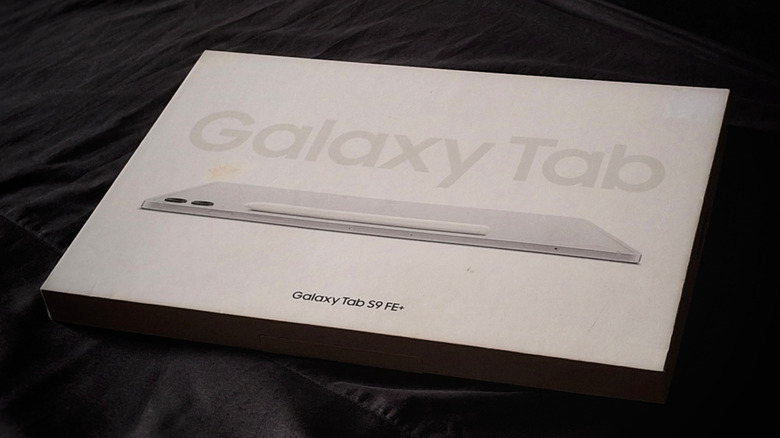
The story is similar for Samsung’s tablets. For instance, the Galaxy Tab S10+ features a 120Hz AMOLED display, while the cheaper Galaxy Tab S10 FE+ settles for a 90Hz LCD panel, despite it being a touch larger. Both offer expandable storage, but the FE variant comes with half the storage and 8GB of RAM, while the regular model ships with 12GB of memory.
If you’re shopping for a Galaxy FE smartphone or tablet, you’re missing out on the fastest of chips or the most RAM. The camera system is also a notch below, but should still be able to deliver great photos and videos. In return, you’re getting a device with a premium build and the same excellent software support of seven years with One UI. When it comes to the Galaxy Buds FE, you’re losing out on wireless charging and a few extras like spatial audio.
