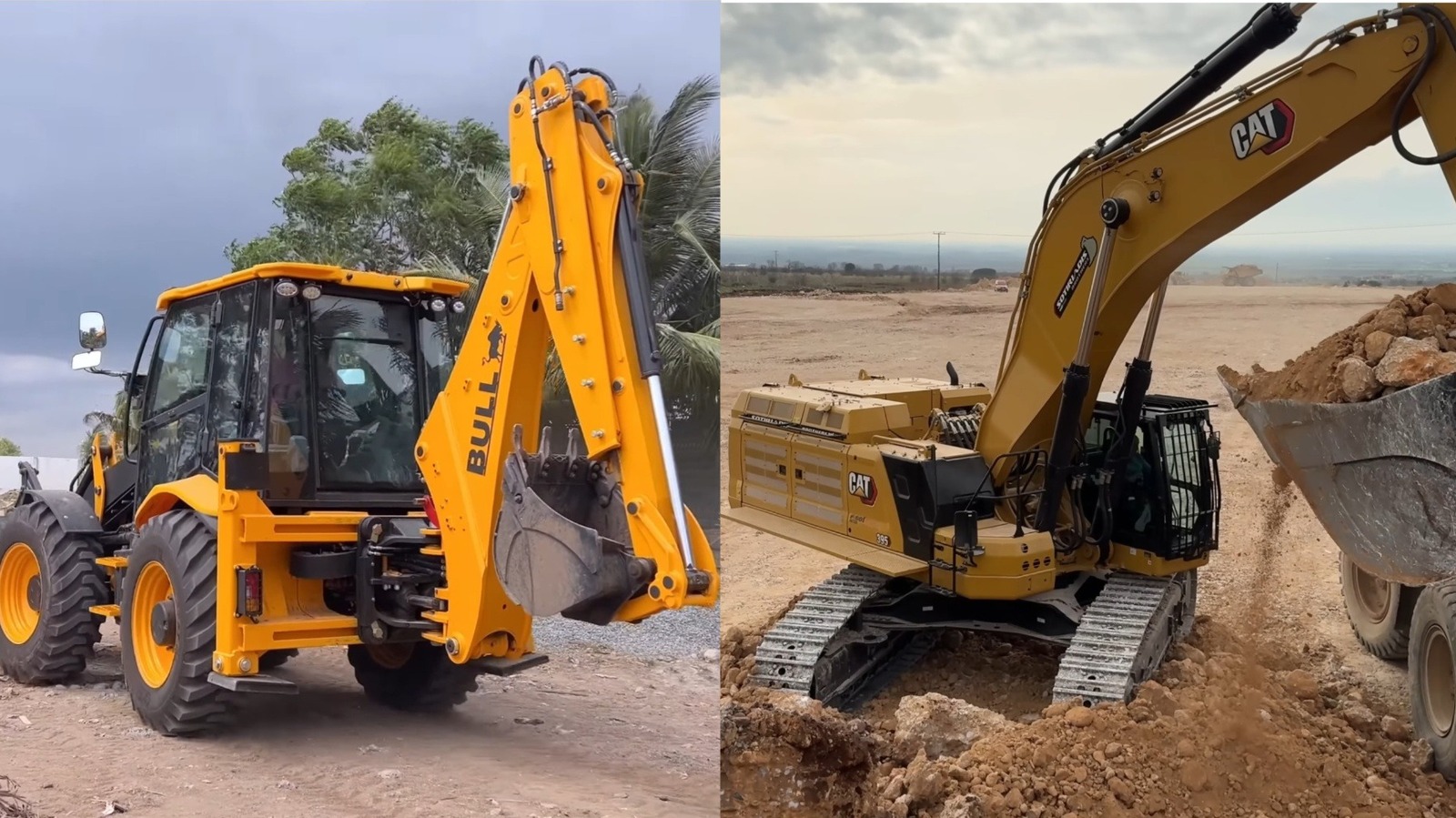
Backhoe Vs Excavator: How Are These Heavy-Duty Machines Different?
A backhoe is part of the excavation family of machines, but there are several differences between it and an excavator. To be clear, not every model of backhoe or excavator is massive like those you might see on a construction site. There are smaller versions of these pieces of heavy equipment, like micro tractor loader backhoes and mini excavators, which are all coincidentally part of the list of things you probably didn’t know you could rent from Home Depot.
The foundation of a backhoe is often a tractor, with a bucket attached to an arm on the rear end in addition to a front loader on the other. These two sections of a backhoe work well together, as the rear bucket digs, and then the front loader scoops up the loose material. Additionally, there are a variety of attachments you can fit to a backhoe, such as for snow plowing and compacting. Because many backhoes are smaller than excavators, they can maneuver into tighter spaces and are easier to transport, with many even able to drive along roads safely.
An excavator typically outperforms a backhoe in the digging department, as they can get their scoop deeper and reach further (with a few exceptions), making it a better choice for large scale projects. Unlike a backhoe, which is restricted to around 200 degrees of rotation, an excavator can easily spin all the way around. Essentially, excavators are designed for jobs well beyond the scope of a backhoe. Specialized excavator machines like the truly gargantuan Bagger 293, which weighs over 15,600 tons, are among the biggest excavators ever built.
Both backhoes and excavators offer unique attachments
While both a backhoe and excavator are often seen with a big scooping bucket at the end of their arm, that’s just one option. Take for instance, an attachment called a Rhinox trenching bucket, which resembles a large single claw you can install on a mini excavator. Rather than scooping up wide sections of Earth, this attachment allows an operator to dig a very narrow channel in the ground ideal for laying water lines, among others.
You can add a patch planer attachment to some backhoes, which replaces the bucket with a rotating drum. This spinning drum includes protruding asphalt picks that peel away surface layers of material along roadways. In order to restore sections of damaged pavement, it’s essential to first grind down the top layer, making it uniformly flat. If you see a backhoe running on concrete or asphalt, it’s likely a road crew is using it to prep the area for resurfacing.
Some of the most unique and striking attachments for excavators can be found in the forestry industry. While these machines do perform digging when clearing land, the bucket can only do so much. Swap out the bucket for something like a forestry mulcher, and you can grind down vegetation including trees measuring up to 10 inches around in many cases. Beyond that, there are grapplers, which can grab ahold of logs for loading, and specialty units that allow for stump removal and splitting.
Unique versions of excavators and backhoes
The largest backhoe loader from JCB is the 4CX-15, which can dig up 20 feet deep and has a top speed of 26 mph. Rather than larger rear tires and smaller front ones, as is typically the case for heavy equipment built on a tractor base, this JCB’s tires are all the same size. This enables the machine greater maneuverability on uneven ground, increasing both traction and offering 13 inches of ground clearance, with a departure angle of 20 degrees. Even more interesting, the 4CX-15 offers a crab mode that allows all four wheels to turn. As you might imagine, this enhanced agility allows operators to get into position or adjust much easier.
Returning to forestry applications, one of the most interesting excavators doesn’t use tracks to get around. Walking excavators feature four hydraulic legs with wheels. These legs can extend, retract and articulate dynamically on extremely steep terrain to maintain stable operation, capable of sinking stabilizing claws into the ground to hold the excavator in place. During felling operations, a significant slope would present challenges to conventional equipment, which could topple over. Even getting the machinery in place would be difficult without first building a road. However, walking excavators have provided a means for crews to perform work in areas other excavators can’t reach.
