What Does A Yellow Buoy Mean For Boating?
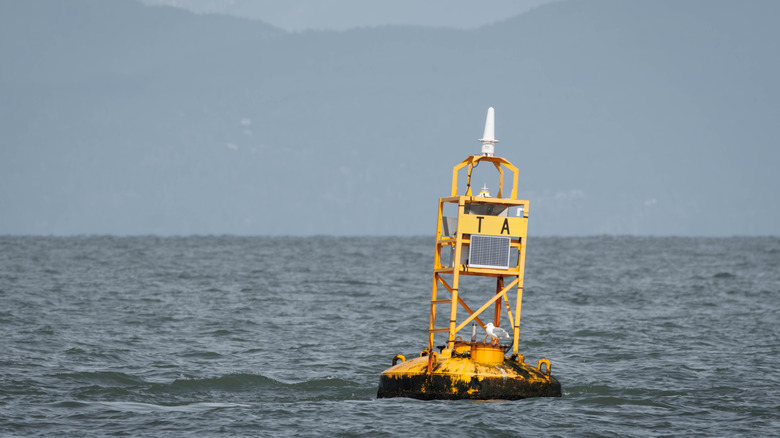
Buoys come in all sorts of different shapes and sizes out there on the water, each with its own unique purpose. While boating, you might see red and green bifurcation buoys, orange information buoys and, of course, those distinct yellow buoys. Under the International Association of Marine Aids to Navigation and Lighthouse Authorities (IALA) buoyage system, these yellow buoys are there to let you know about special-purpose areas, or warn you about specific conditions or hazards.
If you thought you’d only ever see confusing traffic signs on the road, as it turns out, there are confusing signs on the water, too. Depending on the location and the marker, a yellow buoy could stand for anything from a dangerous restricted area, to a safe swimming area. Yellow has also been used to mark research sites, underwater equipment, and protected underwater marine life. It’s quite the wide range of purposes, but yellow covers them all. It’s all about the context they’re used in.
How boaters should react to different yellow buoys
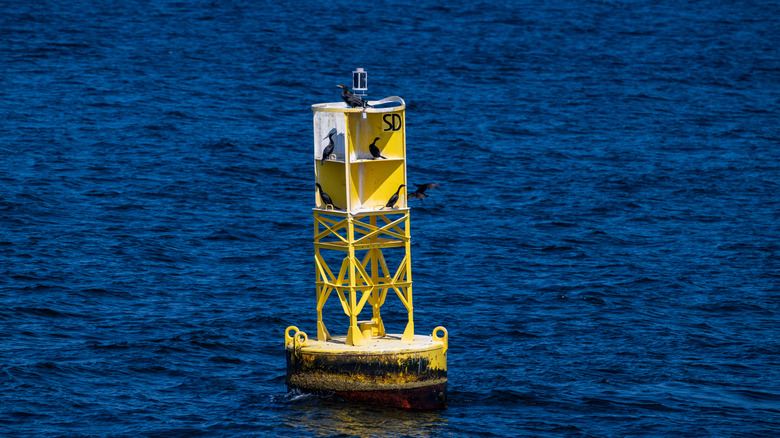
In addition to solid yellow buoys, boaters might also see other yellow buoys with extra markings on them. Some have anchors on them, some have black stripes, both with highly specific use cases. First, the simpler of the two: Anchorage buoys are the yellow ones with a black anchor symbol on them, and they might also have a yellow light on top that flashes once every four seconds. These buoys are there to let you know you’re at the edge of the body of water’s designated area to drop an anchor. After all, you can’t just anchor anywhere in the ocean you please.
Yellow and black buoys are a little more nuanced depending on how they’re painted. These are what’s known as cardinal buoys, and they’re used to mark the direction of the safest navigable water relative to a hazard. They’re almost like yield signs when driving, in a way. The specific direction they’re marking is the direction with the safest waters. North cardinal buoys are black on top and yellow on bottom. South markers are the opposite: Yellow on top and black on bottom. East cardinal buoys are solid black with a yellow stripe, while west ones are solid yellow with a black stripe.
