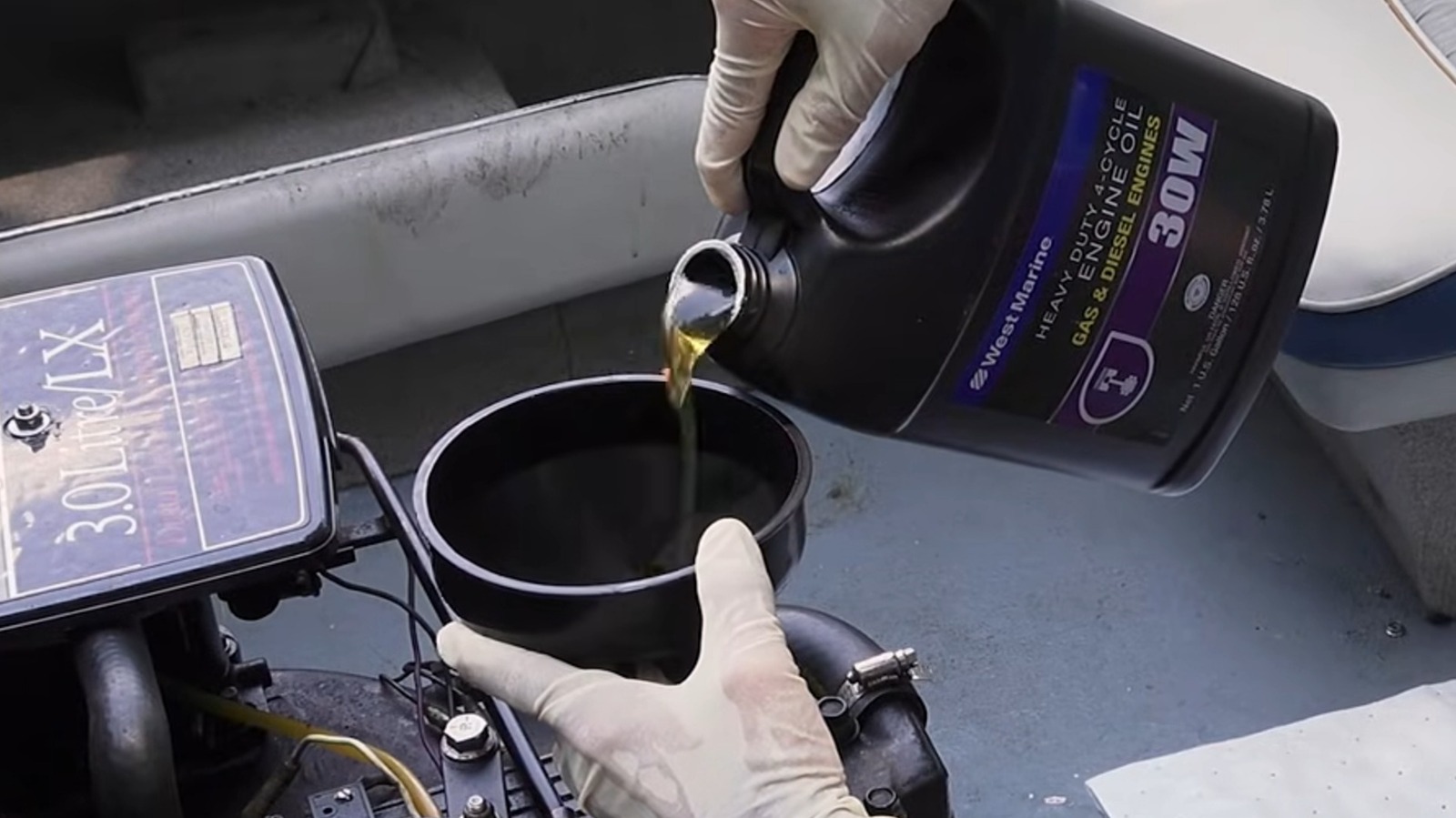
What Makes Marine Engine Oil Different From Automotive Oil?
Boats tend to run at higher RPMs compared to automobiles, and they only run for small portions of the year in most regions. Thus, to account for this, the makeup of their oil is vastly different from automotive oil. Marine oil includes more additives to resist rust, moisture — given boats spend so much time in water — and friction, since higher RPMs means more wear and tear over a shorter period. As for the use span of marine oil, it has an increased amounts of antioxidants to prolong its useable life, so it can sit motionless for longer periods and in lower temperatures without chemically breaking down and gumming up the whole system.
No matter how you’re traveling, though, if your mode of transportation isn’t entirely electric, you need to be mindful of engine oil. It’s essential to keep internal elements well-lubricated so they operate as intended without friction or heat build-up. Automotive engine oil isn’t exactly the same across the board, so it’s no surprise that comparing it to marine oil yields even more differences. The functional differences between marine and automotive engines, the conditions they’re placed under, and the frequency at which they’re used throughout the year play a major role in marine oil’s different makeup .
All that is to say that marine oil doesn’t belong in automobiles and vice versa. They differ drastically and could do some serious mechanical harm if placed in the wrong machine. One area where they do overlap, however, is that in the broad marine oil category, not every bottle contains the exact same stuff.
How marine oil blends differ
Not unlike automobile oil, marine oil comes in different blends, so you need to be careful about what you put inside your boat. These different types are overseen by the National Marine Manufacturers Association and generally fall into two broad engine categories: Two-stroke, labeled TC-W3, and four-stroke, FC-W, oil. You should be aware of which engine your boat has before buying a fresh bottle, and which blend you have. Similar to automotive oil, marine oil also comes in conventional, semi-synthetic, and fully synthetic forms, with increased synthetics meaning longer oil life and, therefore, increased time between oil changes.
Beyond that, there’s the matter of decoding the actual label on the marine oil bottle, which reveals key information about what the oil can do, and if it’s the right stuff for your specific boat. The SAE numbers denote viscosity, which influences things like the temperature range the boat is able to start at easiest. For example, a low first number indicates superior starting ability in low temperatures, while a high second number indicates high prolonged heat resistance once the engine is up and running. Marine oils also vary in additive level, with some having more detergents for corrosion and debris build-up resistance than others.
No matter which of the best motor oil brands or popular synthetic oil brands you’re buying from, you want to know exactly what you’re getting into with each bottle. Marine and automotive oil are far from interchangeable, and even in the narrowed-down field of marine oil alone, there’s still a lot to keep in mind when buying the right blend for your boat.