You Can Sharpen Chainsaw Chains With Cordless Drill Attachments
We may receive a commission on purchases made from links.
Because it moves at high speeds and chops through materials in no time, a chainsaw chain is prone to wearing down. While some prefer replacing their chain outright when the time comes, if you feel particularly handy and want to save some money in the long haul, there’s the option to attempt chainsaw chain blade sharpening. So long as you’re careful, you keep the chainsaw stable, grind the blades at the correct angle, and have the right drill or rotary tool attachment, this is a great way to get the absolute most use time out of your chainsaw chain before buying a substitute.
If you feel confident you can pull it off, sharpening a chainsaw chain using a drill attachment isn’t too difficult. First and foremost is to get the right hardware for the job, chiefly a set of chainsaw blade sharpening drill bits.
Sites like Home Depot and Amazon have them available, with some even including guards for your tool of choice to keep your angle on the blades even. As Shiver Me Timbers on YouTube demonstrates, you then secure the chainsaw and bar using a vice or similar gripping appliance and move the bit perpendicular across each blade, slowly and steadily, also shaving down the raker in front of each blade as well.
Repeat this process throughout the remainder of the chain on both sides until it’s entirely and evenly sharpened. Unless a chainsaw blade shows signs it needs to be replaced, sharpening with the aid of a drill or rotary tool is a great way to extend its lifespan, and there are also other ways to go about this.
Other ways to sharpen chainsaw chain blades
The drill or rotary tool method isn’t the only way to sharpen up a chainsaw blade. Another excellent option is the manual route, which involves much of the same process as the automated one outlined before. Instead of a drill, though, you use a hand blade file to get the job done. As K & J Lumber demonstrates in their YouTube video, with the chainsaw and bar secured in place, you take the hand file and run it through each blade and raker, giving one or two swipes without too much pressure before advancing to the next. You want to preserve the blade angle using the witness marks imprinted on top of each blade, and take your time.
Alternatively, you could sharpen your chainsaw chain using an angle grinder. In this case, you want to remove the dull chain from the chainsaw bar and secure it at the correct blade angle. With eye and hand protection on, slowly bring the grinder down onto the blade, taking a little bit off each blade at a time.
This is another case where patience is crucial, as you want to preserve the angle and not remove more material from the blade than necessary. Pushing too hard or for too long risks heating the blade too much, leading to deformation. Not to mention, the angle grinder is one of the most nerve-wracking tools around, so rushing is definitely risky. No matter which method you choose, sharpening a chainsaw chain’s blades is entirely possible.
Common chainsaw blade sharpening mistakes
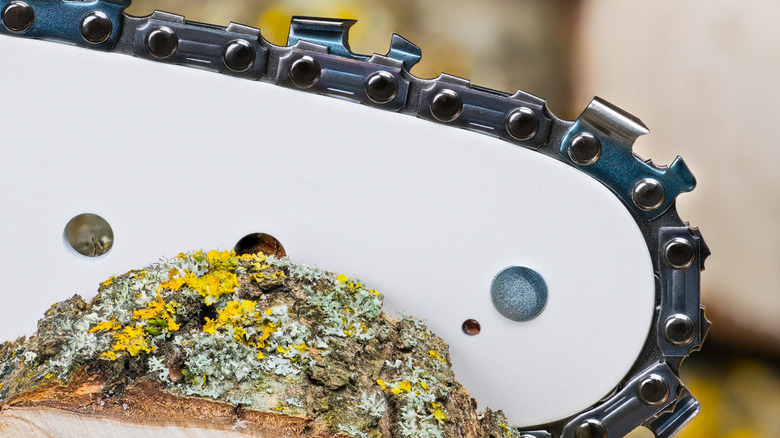
If you rush the blade sharpening process, or don’t take the right precautions, you could end up making some big mistakes. A simple yet aggravating one is not marking where you’ve begun sharpening. It’s a good idea to mark the blade you start on with a marker, so you don’t end up wasting time and blade material by going over the same ones you’ve already sharpened. Speaking of blade depth, chain blades have limits as far as sharpening. When blades get noticeably worn down, or have lost their witness marks, they’re unsafe to continue use or be resharpened, making replacement the only viable option.
The witness mark is also the source of a common chainsaw blade-sharpening flub. If you ignore the blade angle, or don’t stick to it when sharpening, this could greatly impact the chainsaw’s performance. This is one of the possible culprits behind a chainsaw not cutting straight or releasing fine, dust-like debris instead of larger wood chips. Unusually small debris and struggles to cut efficiently could also be attributed to improperly-trimmed rakers or those not trimmed at all. They may not seem as crucial, but they’re essential to ensuring the blade cuts at the right depth without struggle.
A lot goes into chainsaw maintenance, especially chain blade care. While replacing a dull chain isn’t a bad idea, for the confident and capable, there are multiple ways to blade sharpen instead to get some extra use time from your current chain.
