Is Overnight Charging Killing Your Smartphone’s Battery?
How long your smartphone lasts on a full charge is important, especially if you know you’re going to be away from a charger for a while. Despite massive improvements in battery technology, one of the most common myths about charging is that leaving your phone plugged in overnight will damage its battery. This is simply not true.
Modern phones come with smart chips that regulate how much power the battery receives. As your phone nears 100% battery, charging speeds should be reduced and eventually halted, so it won’t be actively charging. Power is drawn in short bursts when your phone loses a few percentage points. Samsung calls these “maintenance charges” and says there’s no risk of overcharging although it does note the small caveat that unplugging at 100% can marginally extend battery lifespan.
Lithium-ion cells indeed last the longest when they spend less time at very high or very low levels of charge — this is where the 20-80 rule in charging comes from. Many manufacturers, like Apple and Samsung, therefore let you turn on an optimized charging option of sorts that’s designed for overnight charging sessions. On iPhones, the feature pauses charging at 80% and finishes topping up shortly before you typically wake, while Samsung’s version offers modes that either cap the charge at 80% or adapt to your sleep schedule. The feature may be labeled a bit differently depending on which smartphone you own.
How to optimize battery degradation
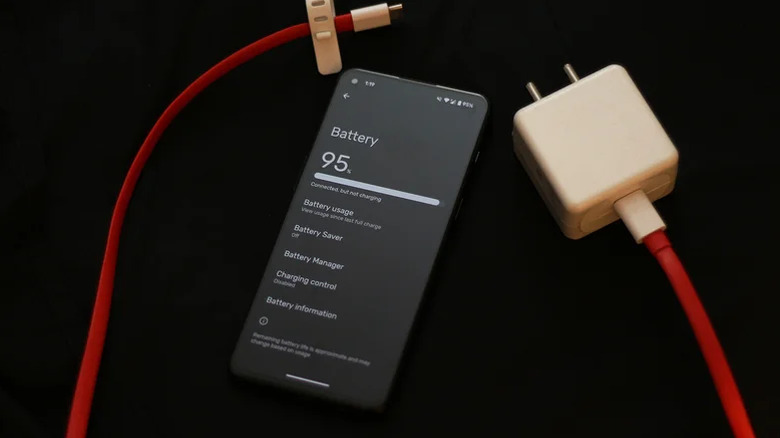
To maximize battery life, you could religiously follow the 20-80 rule — but at this point, you’re effectively only using 60% of your phone’s battery. Some smartphones even let you set charging limits, helping make sure that your phone never exceeds, say, 80% even when plugged in overnight. Regardless, one factor that definitely damages the battery is heat, so avoid charging your phone in hot weather. Apple claims charging your device in temperatures higher than 95 degrees Fahrenheit could negatively impact its battery health.
Gaming-centric smartphones often go through their battery charge quickly, but there’s one way to ease the strain: bypass charging. If your device supports it, this feature powers the phone directly from your charging brick and lets your battery rest.
There’s also the myth that charging your phone with a stronger charger will destroy its battery. This is, once again, not true. The battery controller chip only lets in as much wattage as the phone is designed to accept. That said, sticking with a compatible charger will ensure your phone charges at its maximum rated speed.
Ultimately, battery degradation depends on the charge cycle count. You can change various settings to extend your phone’s battery life on both iPhones and Android devices. This will, in turn, reduce the number of full charge cycles your battery goes through over time.
