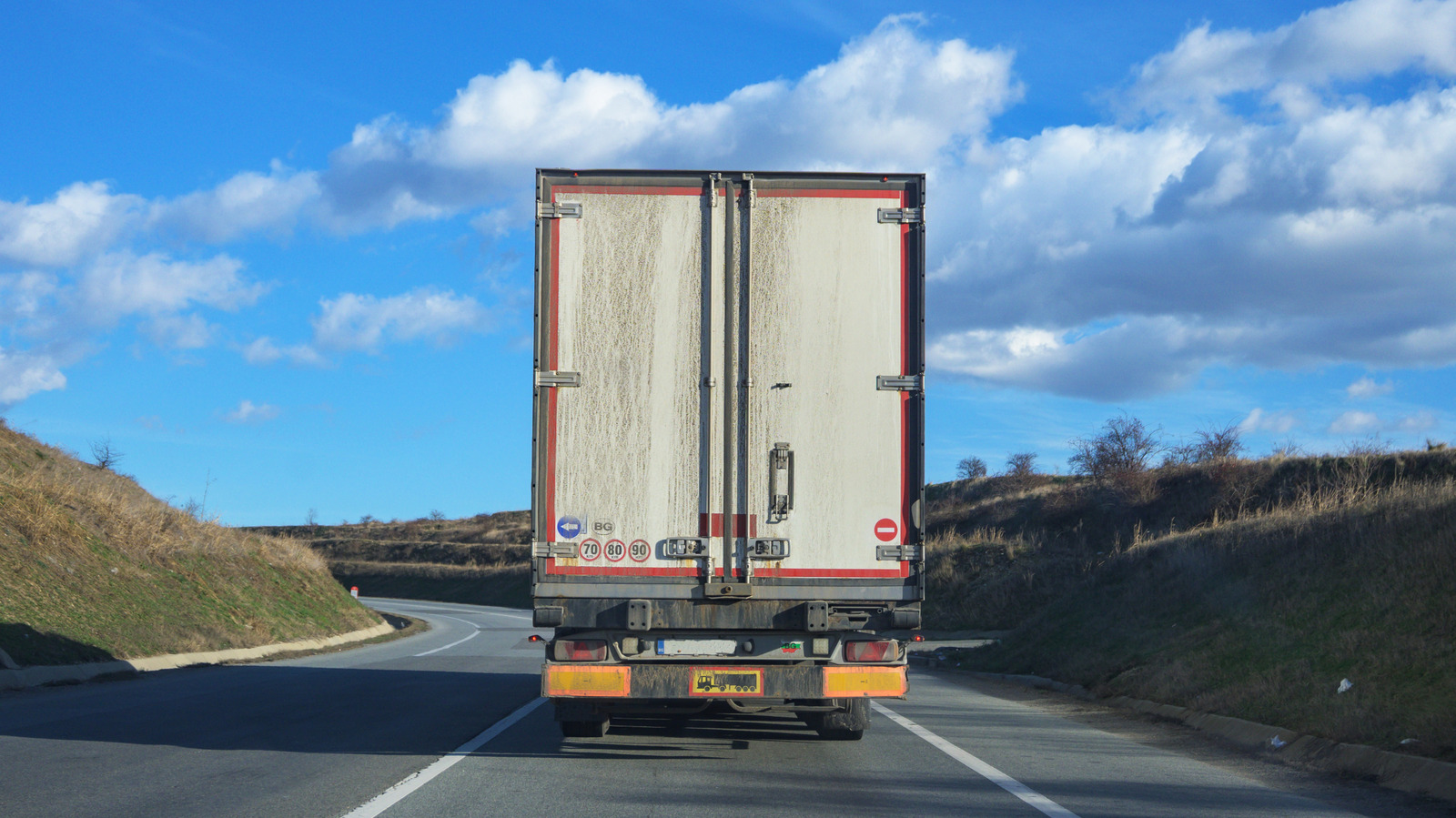
Why Do Trucks In Europe Have Multiple Speed Limit Stickers On The Back?
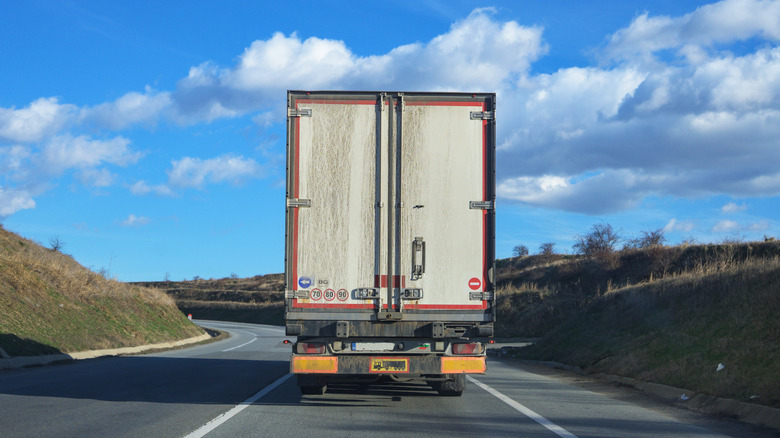
One of the best ways to enjoy summer in Europe is to go on an epic road trip and visit multiple countries. Along the way, though, you may find yourself behind a truck and staring at the stickers on the back, which will often include multiple stickers signifying different speed limits. These aren’t just for show and signify speed limits for different countries.
Europe is home to some of the longest highways in the world, such as the E40 and E60, which pass through different countries. Each will have its own regulations that truck drivers need to follow, including maximum speeds. These speed limits also vary depending on specific road types, even within the same country. Trucks can go faster on highways than on urban roads, for example.
In addition, other factors, like whether the truck is above 5 tons or has a trailer, can also affect its allowable speed limits. To take it a step further, some countries like France even have dynamic speed limits that can be lower when it rains. Europe is known for having thousands of speed cameras across the many highways that connect its member countries, so it’s serious about fines. Apart from speed limit stickers, trucks in Europe will have a bunch of other stickers on the back. Here’s what they mean.
What do European truck stickers mean?
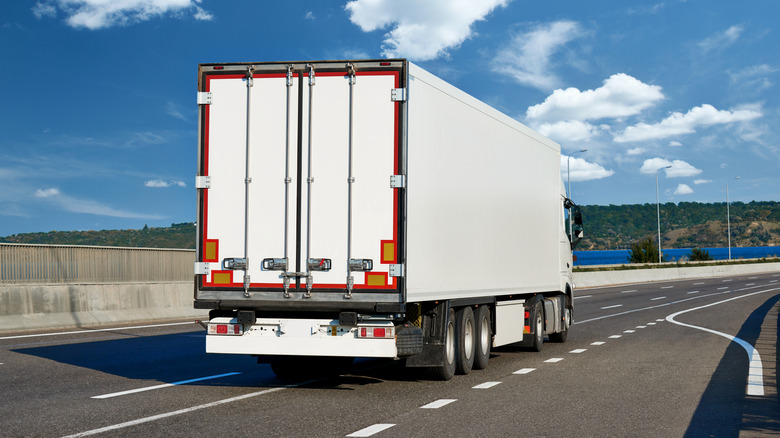
Unlike many of us who add stickers to our cars as a cheap cosmetic upgrade to add some personality, European truck owners don’t do so for fun. Some stickers are for trucking companies to stay within regulations, ensuring they’re allowed to operate between different countries and to avoid any fines.
Apart from speed limits, truck stickers can also signal that a particular truck is permitted to pass through a specific type of area. For example, a green “L” sticker indicates that it’s quiet enough to operate in zones that don’t allow noisier vehicles. Some countries, like Germany and Austria, can be quite particular about keeping emissions low in certain areas, so trucks will have environmental stickers that indicate how polluting their exhaust gases are. Trucks carrying hazardous materials are also required to have ADR markings so first responders know how to manage potential risks from accidents.
For the most part, these stickers are for the benefit of local law enforcement and not the average person on the road. In that case, which stickers should you be paying attention to if you happen to be driving alongside European trucks?
Truck stickers you should know when driving in Europe
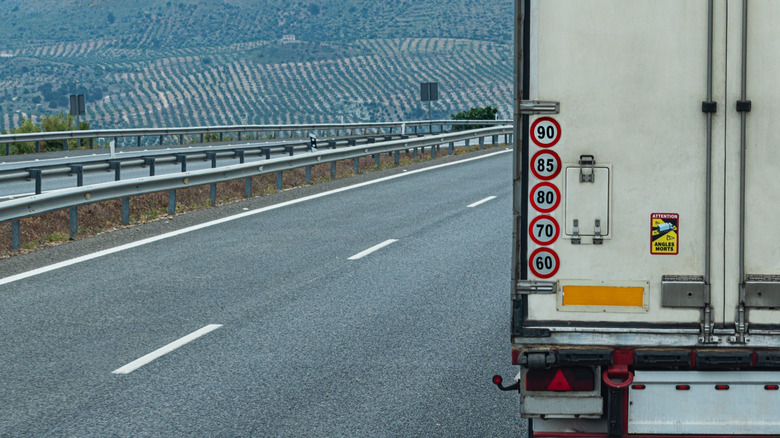
Realistically, you don’t necessarily need to know what all the stickers on European trucks mean. However, there are some that are worth understanding. France requires trucks to apply “Angles Morts” stickers that indicate blind spots, so other drivers can be more careful when passing by. Similarly, ECE 104 Regulations mandate reflective contour tape that outlines the rear and sides of large trucks, meant to help avoid accidents by improving visibility in low-light conditions.
Returning to the speed limit stickers, they’re also important to manage other drivers’ expectations, such as when trucks are going slower than what is allowed for regular passenger vehicles. For example, trucks over 3.5 tonnes are limited to 80 km/h on German motorways, even on sections of the Autobahn with no speed limits at all. In this case, the stickers are there to help other drivers manage their road rage at trucks that are just trying to follow the rules.
